“A man before me used to chatter that the pure tone alone meant something in music. And I say that it means nothing unless it is embedded in life, in blood, in environment. Otherwise it is a toy that may not be valued.”
Leoš Janáček (in a letter to Max Brod, 2 August 1924)
What is Chamber Opera?
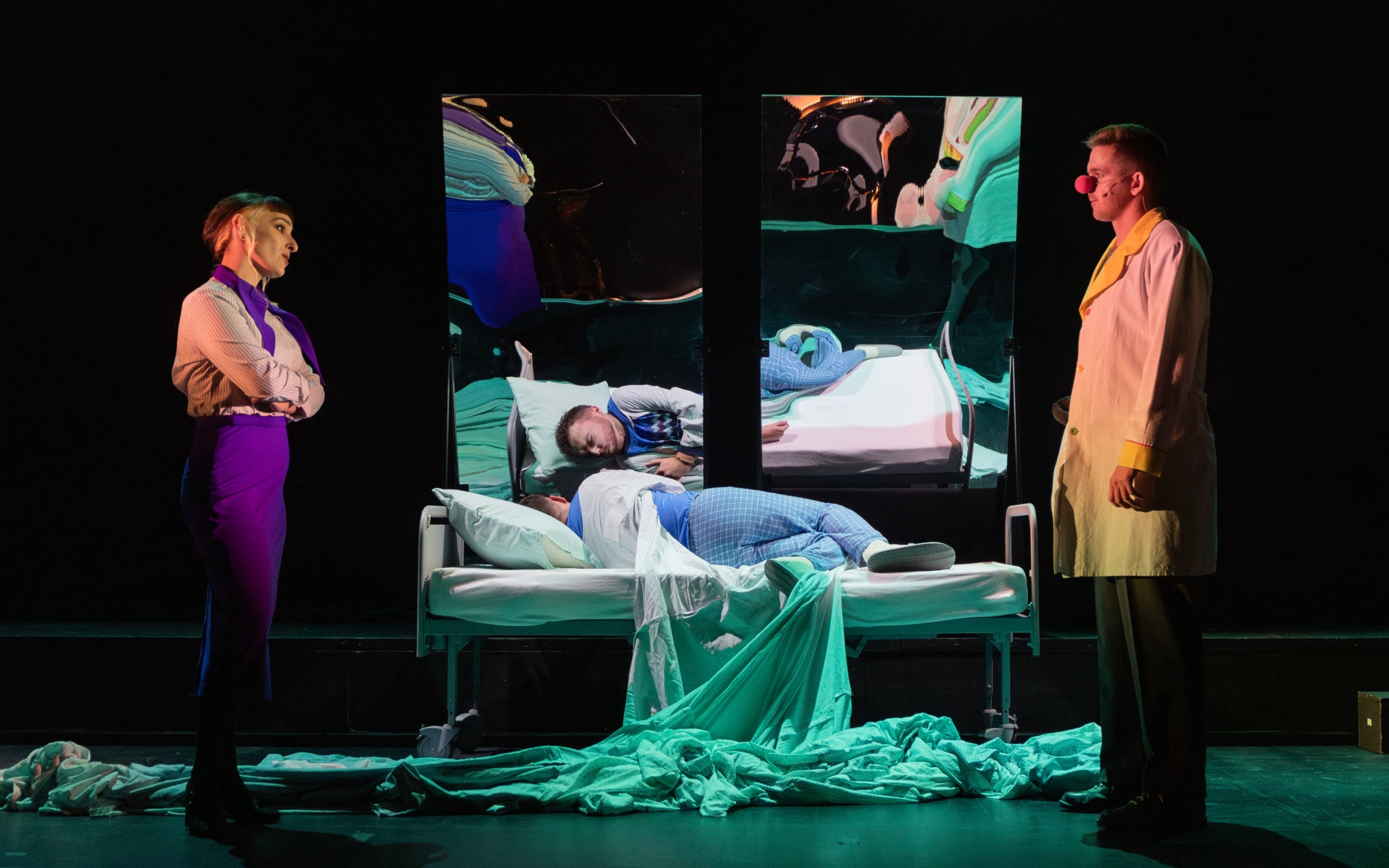
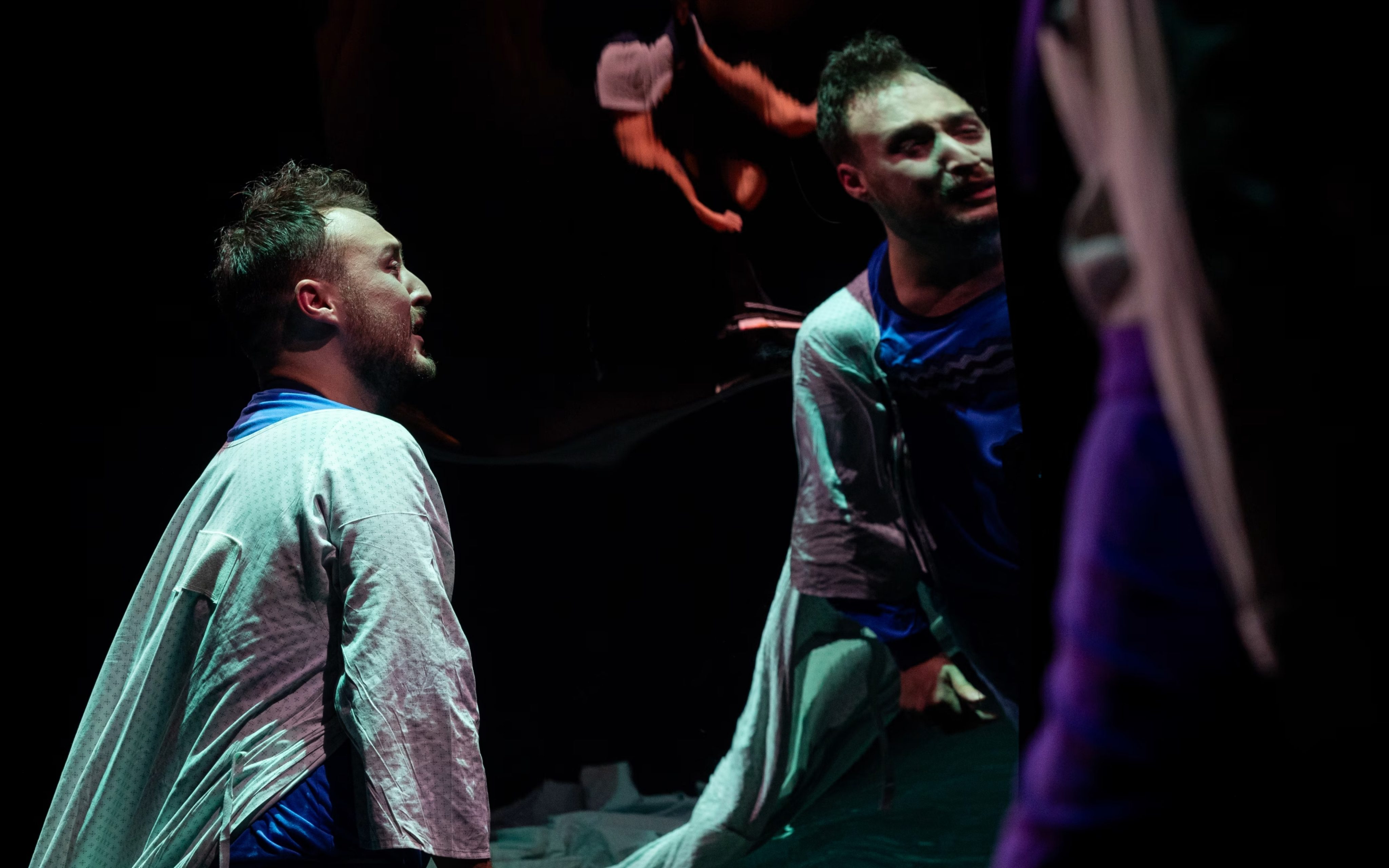
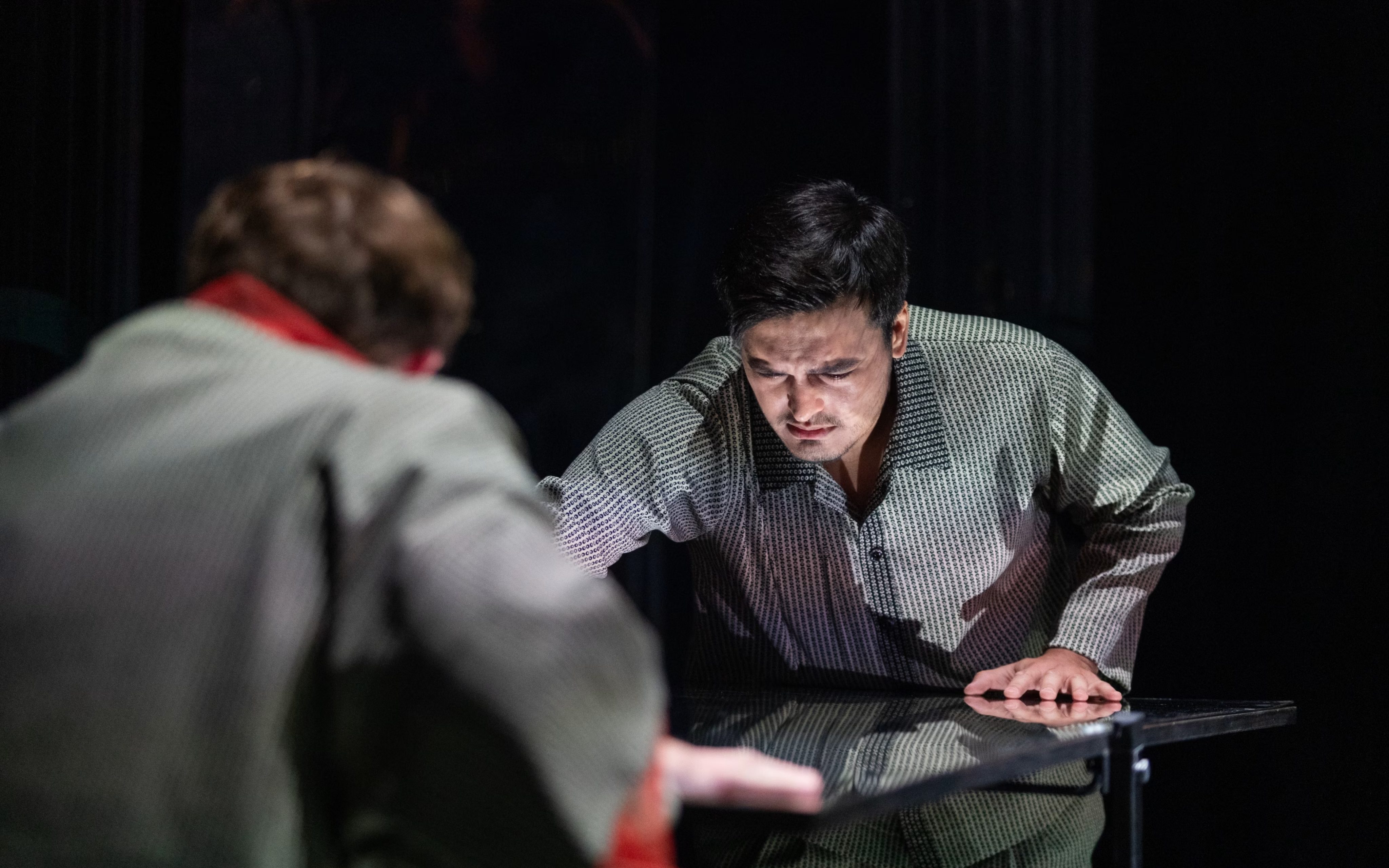
Chamber Opera HF JAMU is a unique academic workplace serving students of many disciplines to learn skills and gain experience directly in practice, under the supervision of teachers. Students from various disciplines from the music and theatre faculty work here in all kinds of positions, such as:
- Directors,
- Conductors,
- set and costume designers,
- composers and librettists,
- dramaturgs,
- singers and actors,
- musicians and accompanists
- Production,
- lighting designers and stage technologists
- inspectors, assistants and other professions according to the needs of a particular production.
Opera studio JAMU 1957-70
The first JAMU opera performances were staged in the JAMU Theatre Studio (established in 1949 in the New Home Hall at 43 Gorky Street, the same year it was moved to the theatre building at the Exhibition Grounds, and in 1952 to the Marta Hall at 25 Bayerova Street) and in cooperation with the Brno Conservatoire at various venues (Mahen Drama Theatre, Reduta, Besední dům, Marta, Dělnický dům). They were led by directors and conductors J. Munclinger, A. Balatka, O. Zítek, F. Jílek and B. Bakala. During this period, Škroup’s The Tinker ( 1950), Smetana’s The Little Mouth ( 1951), Janáček’s The Beginning of a Novel (1954) and Humperdinck’s The Gingerbread House (d: R. Eliška, r: F. Kunc, small orchestra of the Czechoslovak Radio, 1955) were staged, the premiere of which is considered to be the very beginning of the opera studio. The JAMU opera studio under the direction of M. Wasserbauer was institutionalized in 1957. Svatopluka Čecha no. 35. After a fire in the autumn of 1972, the building was reconstructed until 1974, including the rebuilding of the technical facilities, and reopened on 7. 12. 1975 Tchaikovsky’s Iolanta. Since July 1994 the theatre has been rented by the League of Wheelchair Users, partially reconstructed the facilities for the troupes and the audience and established its cultural facility – the BARKA Barrier-Free Theatre. The Chamber Opera of the Faculty of Music of JAMU continues to operate here under contract with the League of Wheelchair users until 2012.
Chamber opera by Miloš Wasserbauer 1967-94
The director and teacher M. Wasserbauer (head of the studio 1957-70) gave the school stage clear rules, based on pedagogical principles still applied today. In his conception, the studio was an essential part of the comprehensive training of opera singers, chorus masters, conductors and directors. It led students to regular practical activity and creative discipline. It was therefore not just a stage for graduate performances, but studied about four premieres a year and had a more or less regular operation, which greatly enriched the Brno opera scene (in the early 1960s it usually performed 50-60 performances a season and also went to the countryside around Brno; to date it has staged over 200 premieres). Following Wasserbauer’s principles, audiences progressed from the simplest tasks to graduate performances, with a practical introduction to all theatrical professions, including service and technical ones. Students in the lower grades worked as extras and dancers, performed ancillary technical work, and only rarely played episodic roles, only gradually were they assigned more serious artistic tasks. The students of directing, conducting and choral singing progressed from assisting through sub-tasks and small sketches to the preparation of full-length productions. The artistic ensemble was supplemented as needed by graduates of the school and young Brno singers, and sometimes the Brno Opera (choir, orchestra) helped out. In order to raise the level and set a creative example, important guests were invited, especially directors (e.g. J. Glogar, V. Věžník) and conductors. All the departments, which were responsible for the teaching of opera professions (i.e. singing, directing, conducting, movement education, etc.), participated in the operation and management of the stage, both organizationally and pedagogically. The JAMU Rector’s Office managed the operation of the studio through the artistic director, the operating secretary, the dramaturge and the artistic advisory board (established in 1960), consisting of representatives of all participating departments and, from about the mid-1960s, also of student representatives. After Wasserbauer’s death, the leadership was replaced by V. Střelcová, R. Kefer, I. Hylas, F. Preisler and J. Novák, and after 1989 J. Pinkas, E. Holiš and 1995-2000 V. Nosek. The dramaturgy was subordinated to pedagogical considerations: operas of various periods were regularly performed, often little-performed or unknown works, but also repertoire operas, where the audience was to experience for the first time the great roles of the Czech and world repertoire. The studio scene, often in collaboration with the Czech Music Fund, presented a number of unusual titles (e.g. Purcell: Dido and Aeneas, 1960; Chlubna: Kolébka, 1963; Fibich: Helga, 1965; Zámečník: Fraška o kádi, 1968; Mozart: The Gardener of Love; Rimsky-Korsakov: Vera Shelogova; Monteverdi: The Coronation of Poppaea – 1972; Martinů: The Voice of the Forest, 1976; Jirko: The Millionairess, 1977; Míča: On the Origin of Jaroměřice, 1980) including Czech premieres (Martinů: Ariadne, as part of a triple bill of the same name, which included Monteverdi’s Lament of Ariadne and Benda’s melodrama Ariadne on Naxos, 1962; Martinů: The Song of Love and Death of Tristan and Isolde, 1967; Berg: …to writhe under the chassis of history… together with: Euphrides at the Gates of Tymen, Odysseus’ Return, European Tourism, 1967; Odstrčil: Tissue, 1978; Jedlička: The Drama of Mrs. Murakin, 1988; Hurník: Oldřich and Boženka, 1997, etc.).
Chamber Opera HF JAMU 1994-present
In the second half of the 1990s, the head of the studio, Václav Nosek, initiated the creation of several short operas and etudes by contemporary Czech composers (Berkovec: Klíč; Fischer: Tys me so angry, Varta; Hurník: Stažená hrdla – 1997; Kaňák: Agadir, 1999). A significant part of the repertoire continued to consist of imaginative discoveries of pre-classical opera (Telemann: Pimpinone; Gluck: Paris and Helena – 1996; Pergolesi: Livietta and Tracolo, 1997, etc.). Particular attention is paid to the work of B. Martinů(Tears of the Knife, 1996; Kitchen Revue, Twice Alexander – 1997), which the studio regularly presents at the B. Martinů to Polička.
Alena Vaňáková, the director of the Chamber Opera, had a significant contribution to the direction of the Chamber Opera in the 1990s, alongside Václav Nosek, and the direction of the dramaturgy continued after his death in January 2000. The artistic direction was temporarily taken over by dramaturge Jiří Zahrádka, who was succeeded by conductor, singer and pedagogue Tomáš Krejčí. Since the mid-1990s, the director of the Barka Theatre, Zdeňka Vlachovská, who later began teaching opera production at the JAMU at the Department of Music Management, now Music Production, has been behind the operation of the Chamber Opera and has been working systematically in tandem with Tomáš Krejčí to develop its operation and cooperation to this day.
During this period, Gay’s Beggar’s Opera was staged in two forms, first with original music by Christopher Pepusch (1998), then in Benjamin Britten’s version (2005).Britten’s work was also used for Albert Herring (1999) and the audience could also see Orff’s The Catcher ( 2000).
Among the Czech original novelties, let us mention at least Ilja Hurník’s Oldřich and Bozenka, Karel Škarka’s Don Juan in Hell and Markéta Dvořáková’s The Giraffe Opera. These two operas were performed in November 2002 on the stage of the Estates Theatre in Prague in a co-production with the National Theatre as part of the original works project Knocking on the Iron Curtain. The Czech premieres of several operas, such as Antonín Tučapsky’s Nude Owner of the Funeral Home, together with the stage performances of Martinů’s cantata The Wedding Shirts (2005), Gilbert and Sullivan’s Ruddigore, Holst’s Sávitrí (2007) and Carlo Menotti’s Medium Gian (2009), were also important dramaturgical undertakings.
In 2010-2012, after years of effort on the part of the JAMU management, with the support of the Ministry of Education of the Czech Republic, the Theatre at Orlí was built, the Musical and Dramatic Laboratory of the JAMU, a modern stage equipped with modern technology, especially for opera and musical, but also for other productions.
The first opera performance in the new Theatre took place on 17 November 2012. It featured operas by two important personalities of Brno’s musical life in the second half of the twentieth century, Josef Berg’s European Tourism and Miloš Ištvan’s Beauty and the Beast. The production was part of the international festival Janáček Brno 2012.
Two years later, at the next edition of this festival, the Chamber Opera presented a production of Janáček’s The Cunning Little Vixen (2014).Other productions include Don Giovanni and The Bartered Bride (2013), in its original form with dialogues, Jiří Najvar’s original novelty The Extinguishing, performed on the same evening as Tears of the Knife B. Martinů, and his Mirandoline (2015) in the same year. A dramaturgical highlight was an evening consisting of Petr Hala’s opera Mistrova or When the Bolsheviks Cancelled Christmas and Miroslav Hába’s The Little Prince, and a new production of Gluck’s Orfeo (2016) in collaboration between the two faculties was extraordinary, as well as Mozart’s The Magic Flute (2017) and The Marriage of Figaro (2020). Among the most recent productions it is worth mentioning F. Poulenc’s Dialogues of the Carmelites (2022) Monteverdi’s The Coronation of Poppea (2023), Szokolay’s Blood Wedding (2025), but also the nude plays In the Well (Blodek) and O. Mácha’s Trapped Infidelity ( 2024) in collaboration with the Theatre and Education for the Deaf Studio were remarkable in this sense, or Tomorrow will… Aleš Březina (2025) in a distinctive directorial interpretation.
It can therefore be stated that the trend of staging at the Chamber Opera is clearly on the rise. And it is necessary to emphasize especially the systematic care that is devoted to the creation and staging of new operas in cooperation with the Janáček Brno Festival.
Sources:
VIVAT ACADEMIA III Almanac for the 70th Anniversary of JAMU
Chamber Opera JAMU – CZECH THEATRE ENCYCLOPEDIA Josef Herman
The multiple jubilee of the Brno JAMU and its student opera scene Mojmír Weimann
49. Zdeňka Vlachovská – director – WHERE ARE YOU GOING?
Compiled and edited by Tomáš Studený using the above sources
Tomorrow will be… – Orlí Theatre
ECHO AND NARCIS / OLIVER / CREATING – Orlí Theatre
In the Well / Trapped Infidelity – Orlí Theatre
The Coronation of Poppea – Orlí Theatre
J.A.K. from Labyrinth / Calvary – Orlí Theatre
Dialogues of the Carmelites – Orlí Theatre
The Voice of the Forest / Merry Play on the Bridge – Orlí Theatre
FIGARO’S WEDDING (LE NOZZE DI FIGARO) – Orlí Theatre
THE LOVE LESSON (LA PIETRA DEL PARAGONE) – Orlí Theatre
IL MATRIMONIO SEGRETO (The Secret Marriage) – Orlí Theatre
Falstaff / Unknown – Orlí Theatre
Widow Grapin / Engagement at the Lanterns – Orlí Theatre
Die Kluge (The Clever Girl) – Orlí Theatre
The Magic Flute – Orlí Theatre
THE MISTRESS OR WHEN CHRISTMAS WAS CANCELLED / THE LITTLE PRINCE – Orlí Theatre
Orpheus and Eurydice – Orlí Theatre
Impresario in the End – Orlí Theatre
Tears of the Knife / Lights Out – Orlí Theatre
The Cunning Little Vixen – Orlí Theatre
BYLTY JEST JEDNOU KANTOR DOBRÝ / BOUŘE – Orlí Theatre
Janacek Brno
Znojmo Music Festival
Smetanova Litomysl
Selection of graduates
Many of today’s successful directors, artistic directors, directors, conductors, dramaturgs and academics gained their first experience at the Chamber Opera.
Directors
- Alena Vanakova
- Jiří Glogar
- Jan Štych
- Monika Holá
- Patricia Částková
- Rocc
- Magdalena Švecová
- Beno Blachut
- Tomas Cold
- Linda Hejlová Keprtová
- Tomáš Ondřej Pilař
- Zuzana Fischer
Conductors
- Jan Zbavitel
- František Preisler
- Petr Altrichter
- Rastislav Štúr
- Tomas Hanus
- Jaroslav Kyzlink
- David Svec
- Martin Peschik
- Gabriela Tardon
- Pavel Šnajdr
- Ondrej Olos
Choristers
- Jan Rozehnal
- Jan Ocetek
- Martin Buchta
- Zuzana Kadlčíková
- Gabriel Rovňák